Nirvana Odu

Odiani’s nostalgia

  • In Bangalore, we have a special tradition called Baramashi (in Odia and Bengali), where 12 months of the year bear fruits. But when summer hits, my basket is always filled with mangoes.

    This time of the year calls for the refreshing Kairi Sharbat (also known as Aam Panna or Poda Kancha Amba Poda in Odia)—a heat-resistant drink with an exquisitely smoky, tangy, and sweet flavor. It’s the perfect way to cool down and recharge during the intense heat of summer. Trust me, you’ll want to gulp down this smoky-flavored nectar!

    Here’s the recipe to get you started:


    Preparation Time:

    15 minutes


    Ingredients:

    • 1 raw mango (Kairi or green mango)
    • 4 tbsp jaggery or sugar (adjust based on your taste)
    • 1 tsp black salt
    • 1/2 tsp normal salt or pink salt
    • 3–4 black peppercorns (crushed in a mortar and pestle or use pepper powder)
    • Fresh mint leaves (for garnish)
    • 1 lemon (for garnish)
    • Jeera (cumin) and dry chilies (roasted and powdered) – I keep a stock of this in my kitchen, but you can use roasted jeera if that’s easier.
    • Cold water
    • Ice cubes (optional)

    Method:

    Step 1: Roast the Mango

    1. Start by roasting the raw mango over the stove using a chapati net or a griller.
    2. Hold the mango with forceps and turn all sides until the skin wrinkles and turns black. Don’t worry if it gets a little burnt—that’s where the smoky flavor comes from!
    3. Once the mango is completely roasted, turn off the stove and let it cool for a bit.

    Step 2: Prepare the Mango Pulp

    1. While the mango is cooling, take a little water in a bowl (don’t add all the water at once—we will add the rest later).
    2. Once the mango cools down, peel off the burnt skin and soak it in the same water. This will give the smoky essence to the water.
    3. Mash the pulp in the same water, removing the seed (or gutli). Keep the pulp aside.

    Step 3: Mix the Ingredients

    1. To the mashed mango pulp, add jaggery or sugar, black salt, and ice cubes. Blend everything together until smooth.
    2. Add the mixture to the remaining cold water and adjust the consistency to your liking.

    Step 4: Garnish and Serve

    1. Add mint leaves and a lemon slice for extra flavor.
    2. I like to lightly mash some mint leaves into the panna for added freshness.
    3. Garnish with a sprinkle of black salt, pepper, and roasted jeera masala. Stir well, and your Kairi Sharbat is ready!

    Step 5: Chill and Enjoy

    1. Store the Kairi Sharbat in the fridge to keep it cold, and serve it as a refreshing drink throughout the day.

    Aam Panna

    This Kairi Sharbat is perfect for those scorching summer days, offering a cooling effect with the added benefit of a unique smoky flavor. It’s a drink that carries the essence of Odia summer traditions and brings back fond memories of mango-filled summers. Whether you’re sitting by the window or enjoying it on the go, this drink will be a savior for your thirst!
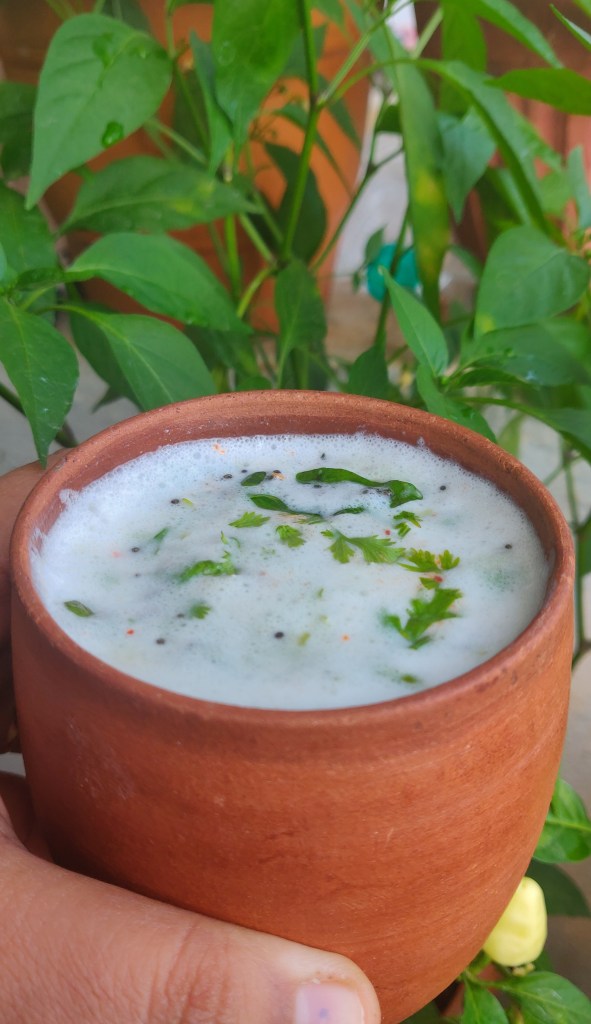

  • There’s something about homemade spices grounded in a silbatta (stone grinder) that fills the air with nostalgia. The aroma of roasted dry spices brings back memories of simpler times, when every ingredient had a story and every flavor a connection to our roots. In Odisha, this cooling drink is known as Gholo Dahi, and it’s something we cherish every summer.

    Though the ingredients are common, the process of making buttermilk can vary across states. I personally love the tempered version called Baghara Dahi—a perfect balance of flavors that cools down your body and hydrates you during the heat of summer.

    This version incorporates raw mango juice, black salt, mint leaves, and a tempering of mustard seeds, chili, roasted cumin, and green chilies, along with mango ginger (or regular ginger, if you prefer). It’s an essential drink to beat acidity, keep you cool, and help with hydration.

    In the old days, we used to churn the curd in a pot, sometimes turning it into ghee, and that’s when the true essence of this drink came alive.

    Let’s take a trip down memory lane and start with the recipe:


    Preparation Time:

    10 minutes


    Ingredients:

    • 1/2 glass curd
    • 1/2 glass cold/normal water
    • Salt (to taste)
    • Mango ginger (or regular ginger)
    • Black salt
    • 1 pinch of Asafoetida (hing)
    • 1 tsp Mustard seeds
    • 1–2 curry leaves
    • Fresh coriander leaves (for garnish)
    • Green chilies (optional)
    • Roasted cumin (Jeera)
    • Optional: Dry red chilies for roasting
    • 4 small drops of oil (for tempering)

    Method:

    Step 1: Prepare the Buttermilk Base

    1. In a mixer, churn together the curd, water, and mango ginger (or regular ginger) with salt. You can add green chilies at this stage if you want a bit of heat.
    2. Add the roasted cumin and stir well. The buttermilk is ready for tempering or can be consumed as-is for a more subtle flavor.

    Step 2: Tempering (Optional but Adds Flavor)

    1. In a small pan, heat 4 drops of oil.
    2. Add a pinch of asafoetida (hing), and let it sizzle.
    3. Sputter mustard seeds and curry leaves.
    4. Once the seeds pop and the curry leaves crisp up, pour the tempering over the prepared buttermilk. Stir gently to mix all the flavors.

    Step 3: Garnish and Serve

    1. Garnish with fresh coriander leaves.
    2. Chill in the refrigerator or serve it immediately with a sprinkle of extra roasted cumin for added fragrance.

    Serving Suggestions:

    This Odia Style Gholo Dahi is a perfect drink to beat the summer heat. It’s traditionally served as a cooling drink, but it can also be poured over rice for a tangy, soothing meal. Whether as a refreshing beverage or a light accompaniment to rice, it’s a summer savior that’s sure to keep you hydrated and refreshed.

    This Baghara Dahi (tempered buttermilk) is not just a drink—it’s a nostalgic journey through flavors and memories. It connects us to our roots, and with the right balance of spices, it helps with digestion, cools your body, and revitalizes you.

  • Chaat—the very mention of it makes my taste buds tingle! Born in Uttar Pradesh, chaat has traveled far and wide, with variations in India, Nepal, Bangladesh, and Pakistan. Each region adds its unique touch to the dish, making chaat one of the most diverse and beloved snacks across South Asia.

    I’ve always been fascinated by the concept of an edible cup, and that’s exactly what we’re making today! Get ready to dive into a bowl of crunchy, tangy, spicy goodness with these edible cups filled with chickpeas, boiled potatoes, and a mix of delightful chutneys and spices.

    Let’s get started!


    Preparation Time:

    30 minutes


    Ingredients:

    For the Edible Cups:

    • 1 small cup boiled Kabuli Channa (chickpeas)
    • 1–2 boiled potatoes (depending on your choice)
    • Salt (to taste)
    • 2 cups Maida (flour)
    • Oil for frying
    • 2 tbsp oil (to knead the dough)

    For Garnishing:

    • Chaat masala (to taste)
    • Pudina (Mint) chutney
    • Tamarind chutney
    • 2 tsp Curd
    • Jeera masala
    • Black salt
    • Pomogranate seeds
    • Sev
    • Fresh coriander leaves
    • Green chilies (optional, for extra heat)
    • Finely chopped onions

    Method:

    Step 1: Prepare the Dough for Edible Cups

    1. In a mixing bowl, combine maida (flour), a pinch of salt, hot oil, and water. Knead it into a soft dough.
    2. Let the dough rest for 15-20 minutes.

    Step 2: Make the Katoris (Cups)

    1. Divide the dough into small balls. Roll each ball into small round flat rotis.
    2. Using a fork, poke small holes into the flattened roti to prevent puffing while frying.
    3. Take a small katori (cup) and place it in the center of the dough. Wrap the dough around the cup in a circular motion to form a bowl-like shape.
    4. Cut off the excess dough with a knife, ensuring the edges are neat. The dough should easily slide off the cup once fried.
    5. Heat oil in a frying pan over medium-low flame. Be cautious not to overheat the oil.
    6. Gently slide the dough katoris into the hot oil and fry until golden brown and crispy. Use a pair of forceps or a knife to remove the katori once it’s fully fried.
    7. Repeat the process to make a batch of edible cups and set them aside.

    Step 3: Fill the Katoris

    1. Once the katoris have cooled, start filling them with the boiled chickpeas and boiled potatoes.
    2. Add a pinch of salt, a drizzle of pudina chutney, and a spoon of tamarind chutney.
    3. Sprinkle some chaat masala, jeera masala, and black salt for that extra zing.
    4. Add a dollop of curd, a handful of pomegranate seeds, and a sprinkle of sev for crunch.
    5. Garnish with fresh coriander leaves and finely chopped onions. For extra spice, add some green chilies.

    Step 4: Serve and Enjoy

    Your Chaat with Edible Cups is ready! Enjoy the crunchy, tangy, spicy explosion of flavors. These edible cups can be served as an appetizer or as a fun, interactive snack for gatherings!

    This Chaat with Edible Cups brings together the crunchiness of the dough cups and the bursting flavors of the classic chaat toppings. It’s the perfect snack for when you want something light, refreshing, and full of flavors. The best part? The edible cups make this a fun twist on traditional chaat!

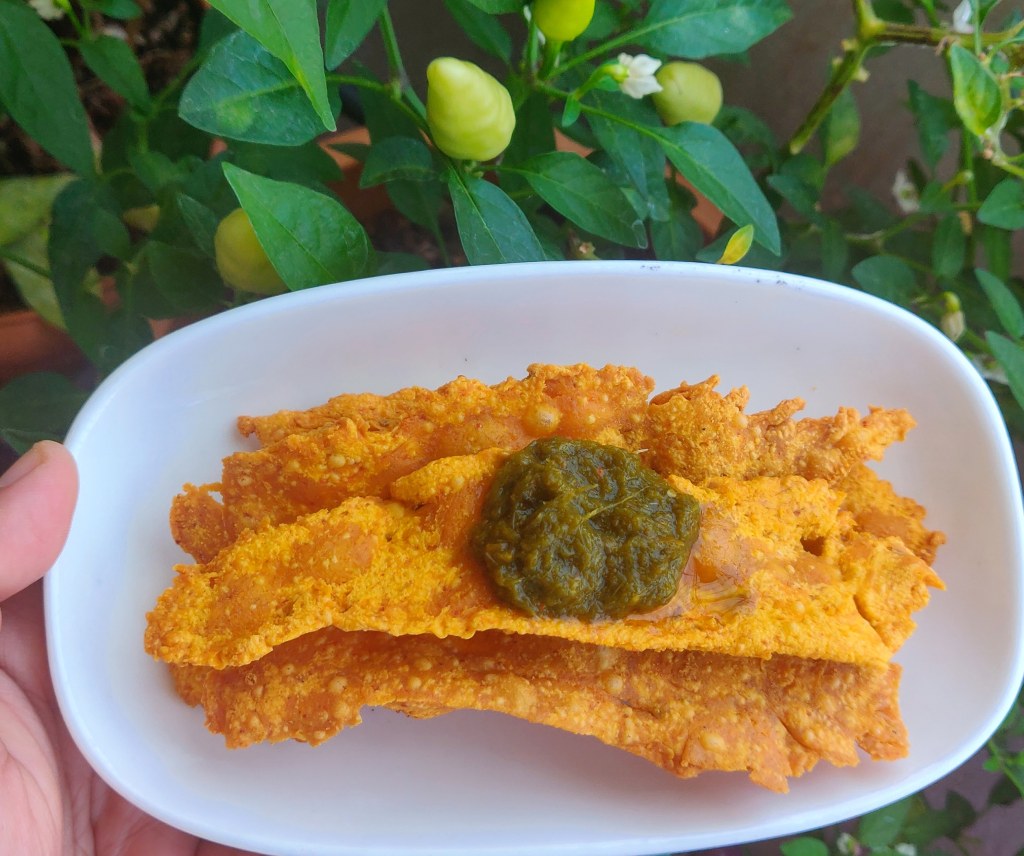
  • Fafda with Dhaniya chutney

    While binge-watching Taarak Mehta Ka Ooltah Chashmah with my sister, we couldn’t help but crave some delicious Fafda and Jalebi. Although time didn’t allow me to make Jalebi, I still managed to whip up some crispy, mouthwatering Fafdas. Jetha Lal’s constant requests for Fafda Jalebis kept ringing in our heads, so we decided to make the best of it!

    Though Fafda is a beloved snack in Gujarat, it’s equally popular in other parts of India. Its combination with Jalebi is unbeatable, but today, let’s focus on making Fafda. There’s also a similar snack called Gathiya, which has a different shape but the same crispy goodness.

    Let’s get started with the recipe!


    Preparation Time:

    • Total: 20 minutes
    • Dough setting time: 15 minutes

    Ingredients You’ll Need:

    • 1 cup Besan (Chickpea flour)
    • 1/4 tsp Carom seeds (Ajwain)
    • 1/4 tsp Turmeric powder
    • 5-6 Crushed black pepper
    • A pinch of Asafoetida (Hing)
    • 3/4 tsp Salt
    • 3 pinches Baking soda
    • 3 tbsp Water
    • 2 tbsp Oil (for dough, and extra for frying)

    Process:

    1. Prepare the dough:
      • In a large bowl or plate, combine the besan, carom seeds, turmeric powder, salt, black pepper, and baking soda. Add the oil and mix everything together.
      • Gradually add water and knead into a firm dough. If the dough sticks, use a little more water to smooth it out. Once it’s smooth, pat a little oil on top and cover with a cloth. Let it set for 25-30 minutes.
    2. Fry the Fafda:
      • Heat the oil in a pan or kadai for frying. To check if the oil is hot enough, drop a tiny bit of the dough into the oil. If it rises immediately, the oil is ready.
      • Make small balls from the dough to prevent it from drying up. Smear a bit of oil on your roti board or chopper board to prevent the dough from sticking.
      • Now, take each ball and press it out gently using the heels of your palms, elongating it into strips. Ensure it’s not too thick or too thin.
      • Once you’ve shaped a few strips, cover them with a cloth to keep them from drying.
    3. Fry the Fafdas:
      • Carefully slide the fafda strips into the hot oil, ensuring not to overcrowd the pan. Fry on low-medium heat. Flip them occasionally until they turn golden brown and crispy.
      • Once fried, remove the fafdas and place them on paper towels to drain the excess oil.
    4. Serve and Enjoy!
      • Store the crispy Fafdas in an airtight container once they cool down. Serve with Jalebis, chutney, or ketchup for the perfect snack combo!

    Tip: Remember to keep the oil temperature consistent while frying to ensure crispy Fafdas. Enjoy this simple yet tasty treat whenever you’re craving something crispy and savory!

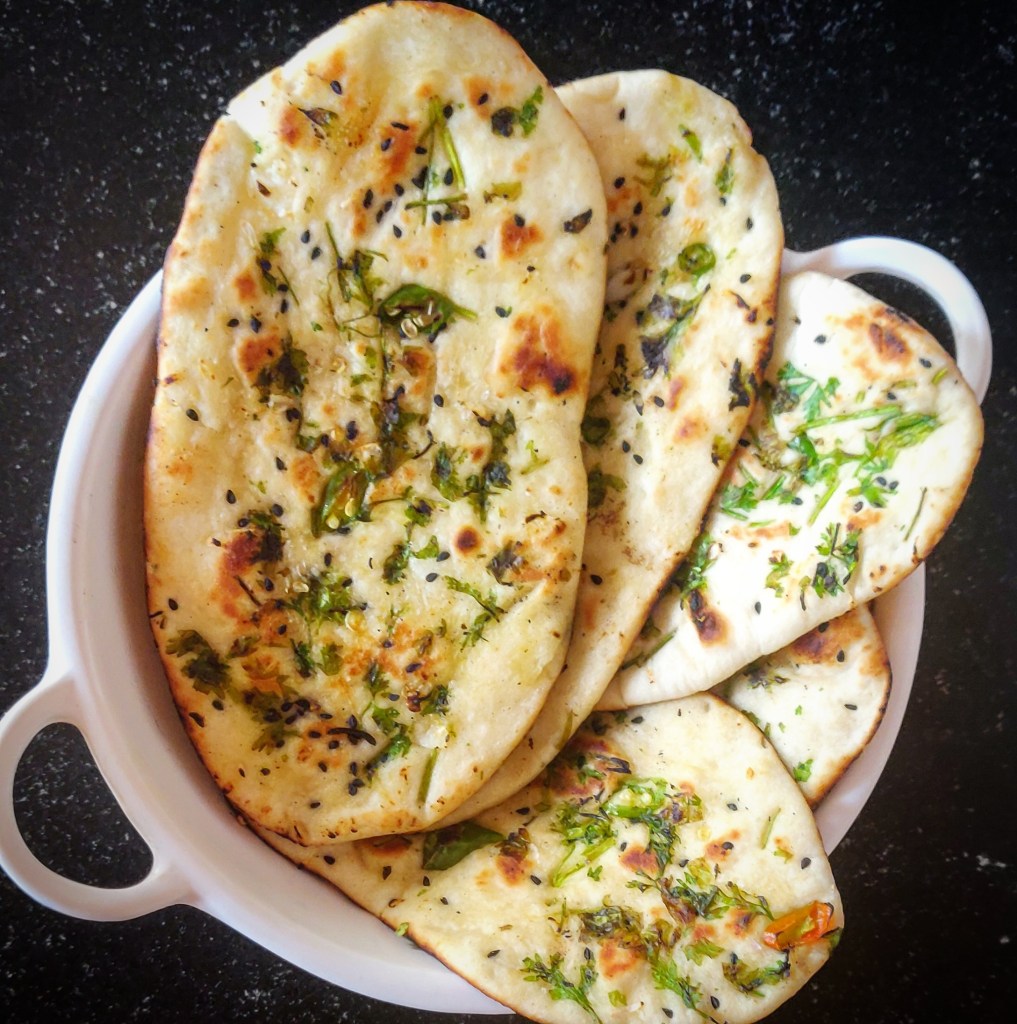
  • Garlic butter naan

    Naan is one of those iconic bread varieties that is a staple in Indian cuisine. Traditionally made in a Tandoor with yeast, naan can be a bit tricky to recreate at home, but don’t worry – I’m here to share my version of making fluffy naan without yeast or a tandoor.

    The key to making soft and fluffy naan lies in the way you knead the dough. With a little practice, you’ll master it! In my recipe, I’ve substituted yeast with yogurt for a similar effect and used garlic for an extra punch of flavor. This version is easy, fun to make, and requires only a gas stove and a tawa (skillet).

    Let’s get started!


    Preparation Time:

    • Total: 30 minutes

    Ingredients You’ll Need:

    • 4 cups Maida (All-purpose flour)
    • 1 tbsp Sugar
    • 1 cup Curd (Yogurt)
    • 3 tbsp Oil
    • 1 tbsp Salt
    • 1 1/2 tsp Baking Powder
    • Warm water (For kneading the dough)
    • 1 small Garlic (Grated)
    • Unsalted Butter (For brushing)
    • 1 tsp Baking Soda
    • Herbs (I’ve used chopped Coriander leaves)
    • 1-2 Green Chilies (Finely chopped)
    • Milk (Optional)

    If You Wish to Use Dry Yeast:

    • You can skip the curd and sugar from the above list.
    • In a bowl, add warm water, 2 tsp dry yeast, and 1 tsp sugar. Mix well and let it bloom for 10-15 minutes. Then, you can use this yeast mixture while kneading the dough. After that, follow the same process.

    Process:

    1. Kneading the Dough:

    • In a large mixing bowl, combine maida, salt, sugar, baking powder, baking soda, oil, and curd (or yeast mixture if using).
    • Gradually add warm water and knead until the dough is soft and smooth. If you’re using milk, you can add a splash for extra softness.
    • Once the dough is ready, wrap it in a cloth and set it aside for 15 minutes to let it rest.

    2. Rolling the Naan:

    • After resting, divide the dough into small balls.
    • Roll each ball slightly lengthwise and widthwise with a rolling pin, forming an oval or round shape.
    • Now, sprinkle chopped coriander leaves, green chilies, nigella seeds, and grated garlic on top of the rolled dough. Fold it over and gently roll it again to incorporate the toppings.
    • You can adjust the toppings according to your preference and form the naan in different patterns.

    Baking/Roasting the Naan:

    There are two methods to roast the naan, but be cautious when using the stove.

    Method 1: Skillet/Tawa Roasting

    • Heat an iron skillet or tawa on medium-high heat.
    • Lightly pat some water on the opposite side of the naan and press it against the skillet. Once you see bubbles forming, flip the skillet over so that the naan is facing directly on the gas burner.
    • Continue cooking until the naan is golden brown and crispy. Flip it back on the skillet to ensure both sides are cooked evenly.

    Method 2: Phulka Method

    • Alternatively, you can use the phulka method, where you roast the naan on the tawa and then place it directly over the gas burner using tongs (be careful not to prick it). Flip it over to roast evenly on both sides.
    • Make sure you roast until it puffs up and turns golden brown.

    Finishing Touch:

    • Once the naan is fully cooked, brush it generously with unsalted butter to give it that rich, soft finish.

    Serving:

    • Serve the naan hot with your favorite curry! I made Kadai Mushroom to pair with it, which you can check out in a separate recipe.

  • There are so many variations when it comes to coffee – from thick frothy milk to steamed milk. At home, I prefer a quick and easy method that doesn’t require much work on the froth. This is a super simple recipe to make a delicious cup of coffee in just 5-10 minutes!


    Preparation Time:

    • Total: 5-10 minutes

    Ingredients You Need:

    • 1/2 cup Coffee
    • 1/2 cup Sugar (adjust to taste)
    • 1/2 cup Milk
    • 2 tbsp Water

    Process:

    1. Prepare the Coffee Mixture:
      • In a small bowl, mix the coffee, sugar, and water.
      • Whisk until the sugar completely dissolves and you have a smooth mixture.
    2. Froth the Milk:
      • In a separate pan, heat the milk and whisk it for a few minutes until froth forms.
      • Don’t worry if the froth isn’t too thick – just a light foam will do.
    3. Assemble Your Coffee:
      • Pour the coffee mixture into a cup.
      • Gently pour the foamed milk into the cup from a slight distance to let the foam sit on top.
      • You can sprinkle some chocolate powder or cocoa as a topping for extra flavor!

    Enjoy!

    • Sip your freshly made hot coffee and enjoy the warmth!

    This simple, homemade coffee recipe will give you a comforting cup of coffee in no time. Enjoy it as a quick pick-me-up or a cozy treat!

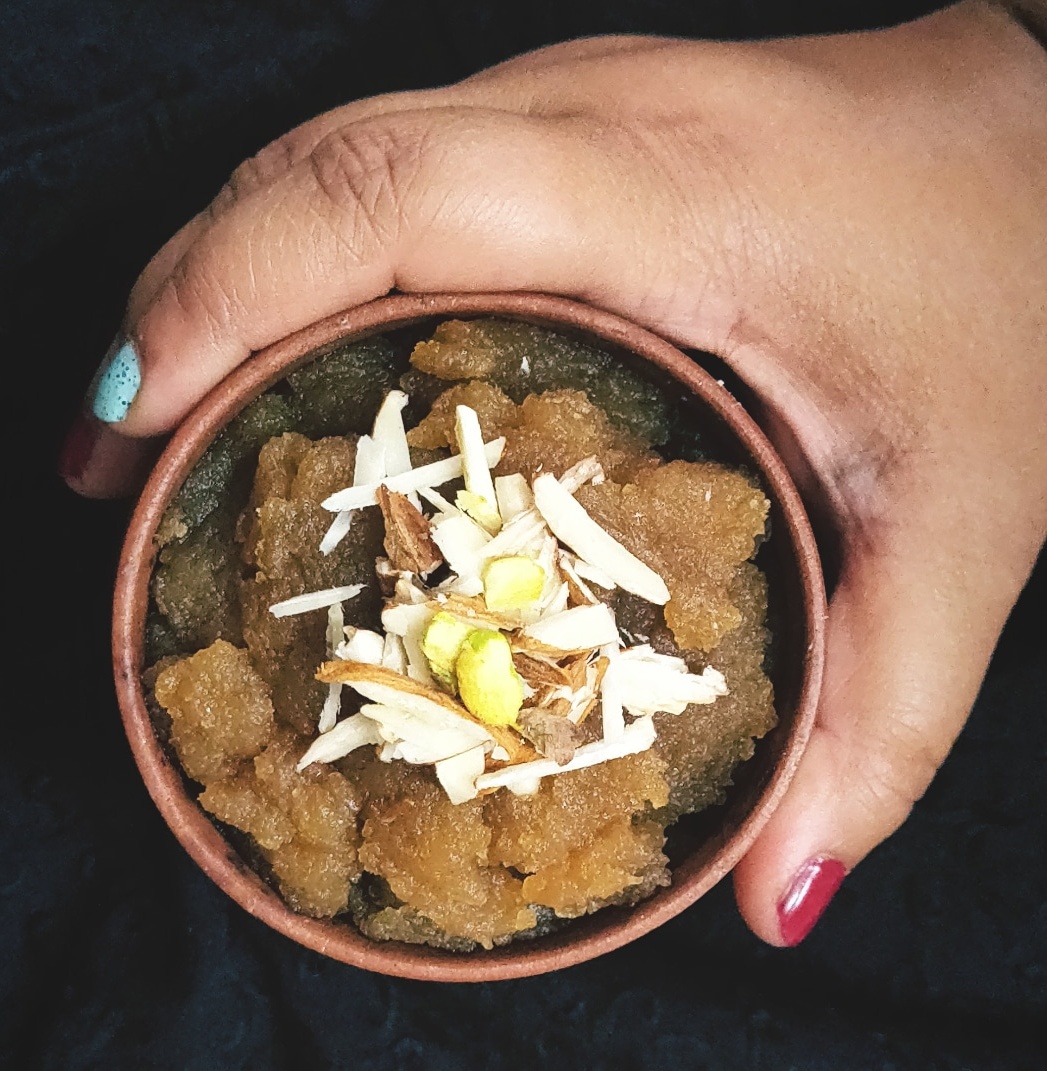
  • Karah Prasad, also known as Atte ka Sheera, is a sacred food offered at Gurdwaras during Langar. It’s a symbol of spiritual peace and harmony for Sikhs and Hindus alike. This traditional dessert is made from either semolina or wheat flour (atta), and it’s a rich, aromatic treat that melts in your mouth. I remember the first time I tasted it during school days at a Gurdwara and knew I had to learn how to make it. Let’s make this delicious offering, and if you’d like, you can chant “Waheguru” while preparing it for added peace.


    Preparation Time:

    • Total: 25 minutes

    Ingredients:

    • Wheat Flour/Atta – 2 cups
    • Sugar – 1 cup
    • Desi Ghee – 2 cups
    • Water – 3 cups

    Process:

    1. Prepare the Sugar Syrup:
      • In a pot, add 3 cups of water and 1 cup sugar.
      • Heat it on medium flame until the sugar dissolves completely.
      • Once the sugar has dissolved, turn off the flame.
    2. Prepare the Wheat Flour:
      • In a separate pan, heat 2 cups of ghee and let it melt.
      • Add 2 cups wheat flour/atta to the ghee, stirring continuously.
      • Keep the flame low to avoid burning the flour, and stir until it turns a light golden color.
      • As it cooks, you will start to smell a nutty fragrance, but be careful not to let it brown.
    3. Combine the Ingredients:
      • Now, carefully add the sugar syrup to the pan with the flour mixture.
      • Be cautious as it may sputter.
      • Stir continuously to prevent lumps from forming.
      • Keep stirring until the mixture thickens, releases ghee, and turns smooth in consistency.
    4. Serve:
      • Once the Karah Prasad has the right consistency (smooth and ghee-released), it’s ready to be served.
      • You can serve it hot or warm, garnished with some nuts like cashews or almonds.

    Enjoy!

    This delicious Karah Prasad is not only a treat for your taste buds but also brings a sense of spiritual peace and fulfillment.

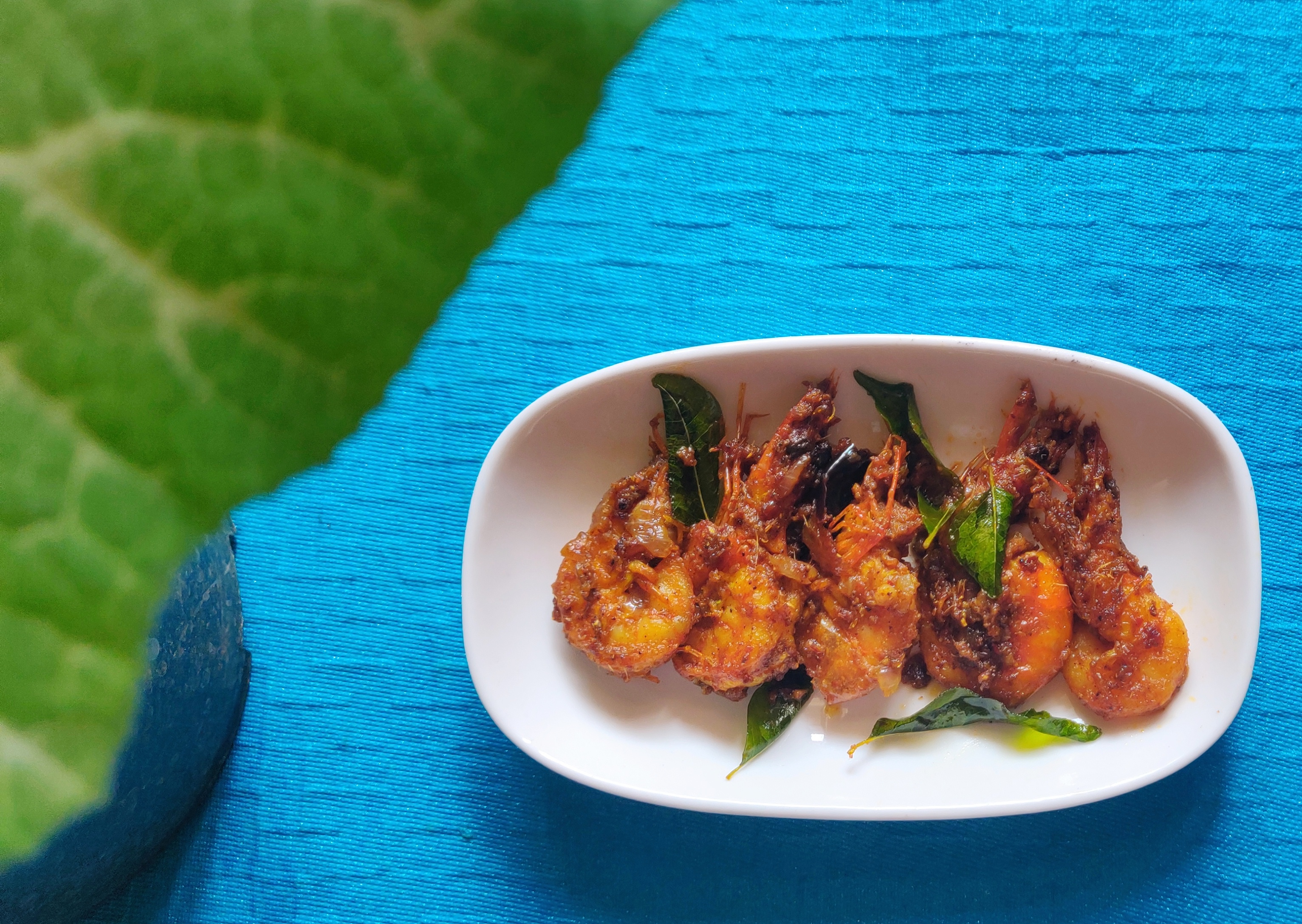
  • When you hear “Chettinad,” the first thing that comes to mind is the vibrant, aromatic cuisine of Tamil Nadu. Chettinad cuisine hails from the Nattukotai Chettiars, or Nagarathars, of the Chettinad region in Sivaganga, Tamil Nadu. Known for its bold, spicy flavors, Chettinad cuisine uses freshly ground spices such as fennel seeds, star anise, chillies, and tamarind, creating a delightful burst of taste in every dish.

    Let’s dive into the recipe for Chettinad Eral Varuval, a flavorful and aromatic prawn fry with a perfect blend of spices!


    Preparation Time:

    • Total: 30 minutes

    Ingredients:

    • Prawns (500gms) – Cleaned
    • Salt – As per taste
    • Turmeric powder – 1/2 tsp
    • Garam masala – 1 tsp
    • Oil – 2 tbsp
    • Ginger garlic paste – 3 tsp
    • Peppercorns – 1 tbsp
    • Dry red chillies – 1 tbsp
    • Cumin – 1 tbsp
    • Cloves – 2-3
    • Star anise – 1
    • Bay leaf – 1
    • Fennel seeds – 1 tbsp
    • Curry leaves – 1 sprig

    (Optional: Marinate prawns for 1 hour for extra flavor)


    Process:

    1. Prep the Prawns:
      • Heat a few drops of oil in a pan and shallow fry the prawns with turmeric and salt for about 5 minutes.
      • The prawns will release excess water, which will eventually evaporate, leaving the prawns lightly fried.
      • Once done, set the prawns aside.
    2. Prepare the Chettinad Masala:
      • In a separate pan, dry roast the following spices until aromatic:
        • Peppercorns
        • Red chillies
        • Cumin
        • Cloves
        • Star anise
        • Bay leaf
        • Fennel seeds
      • Once roasted, grind them into a fine powder to create the Chettinad masala.
    3. Cook the Prawns:
      • Heat oil in a pan and temper curry leaves.
      • Add ginger garlic paste and sauté until the raw smell fades.
      • Add the shallow-fried prawns to the pan along with the freshly ground Chettinad masala.
      • Sauté for a few minutes. Be careful not to overcook the prawns, as they can turn chewy.
      • If the mixture starts to burn, add a little water to prevent it from sticking.
    4. Final Steps:
      • Once the prawns are cooked and coated in the aromatic Chettinad spices, transfer them to a plate and switch off the stove.

    Serve and Enjoy!

    Your Chettinad Eral Varuval is now ready! Serve it hot with rice or roti, and enjoy the burst of flavors that Chettinad cuisine is famous for.


    This recipe is an amazing way to experience the bold and flavorful essence of Tamil Nadu’s Chettinad cuisine in your own kitchen!

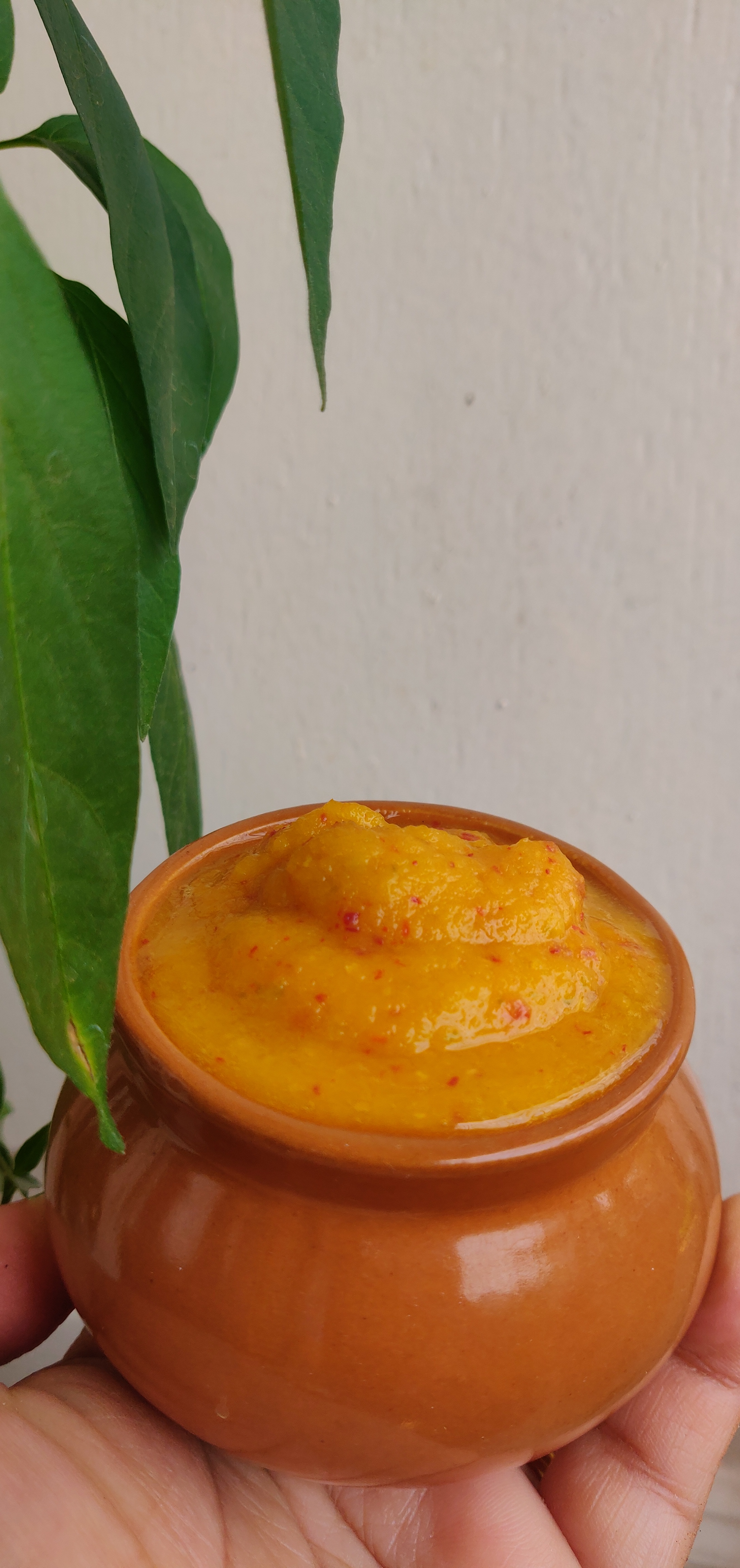
  • Kache Aam Ki Chutney / Mavinakayi Chutney / Amba Chutney / Kancha Amer Chutney

    Summer is synonymous with mangoes, and the cravings are absolutely priceless!

    Whether you call it by a regional name or simply “raw mango chutney,” one thing remains constant—it’s always made with love. The sweet tanginess, coupled with just the right amount of spice, creates an earthy flavor that feels like a warm hug from childhood.

    Mangoes evoke countless memories:

    Summer vacations spent devouring them in every form.

    • The thrill of stealing mangoes from neighbors’ trees.

    • Preparing achar with sun-dried slices.

    • The melt-in-your-mouth goodness of aam papad.

    • Refreshing aam panna and raw mango sharbat.

    • And, of course, savoring raw mangoes dipped in red chili powder and salt—a heavenly combination!

    My Quick and Simple Mango Chutney Recipe

    With just three ingredients, this recipe is as effortless as it is delicious.

    Preparation Time:

    5 minutes

    Ingredients:

    1 raw mango (cleaned, peeled, and diced)

    Sugar (adjust as per your sweetness preference)

    Salt (a pinch to balance the flavors)

    Optional: Red or green chili for an extra kick

    Process:

    1. Combine all the ingredients in a grinder.

    2. Blend until smooth.

    3. Adjust the consistency to your liking—thick or runny!

    Pro Tip:

    Adding chilies gives the chutney a fiery edge, balancing perfectly with the mango’s tangy sweetness.

    Store it in a clean jar, refrigerate, and enjoy for weeks! Perfect as a dip, spread, or a sidekick for your favorite snacks.

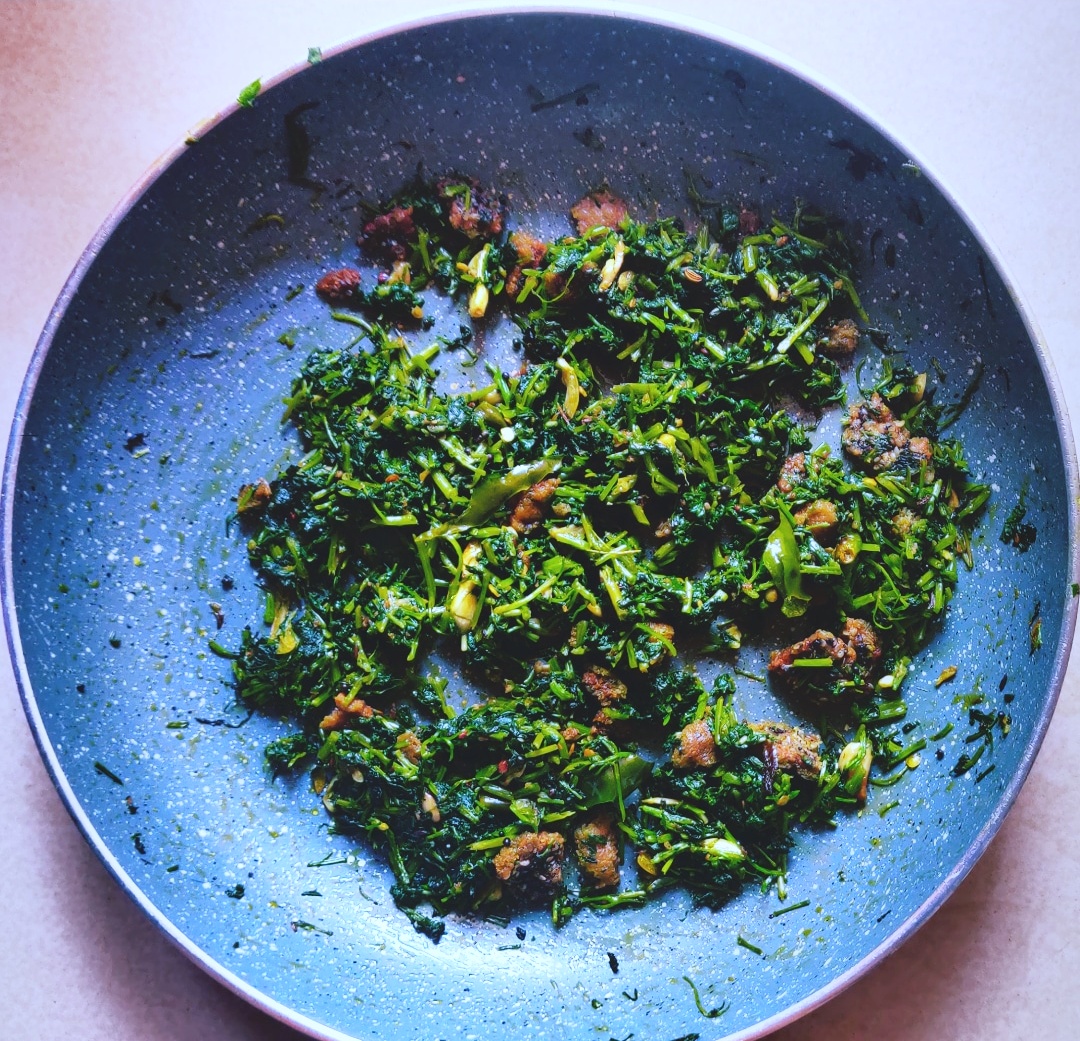
  • Sagaw Bhaja: A Classic Odia Leafy Delight

    Sagaw Bhaja, a quintessential dish in every Odia household, is a simple yet flavorful stir-fry of leafy greens prepared with Indian spices. Among the myriad varieties of saag (greens), I’ve chosen Amaranth Spinach for this recipe. Its preparation is versatile, but the basics remain unchanged—blanch and fry in oil.

    This nutritious green grows abundantly in mountain regions and thrives in my hometown. In Odisha, a Jain-style version is even offered as Mahaprasad at the revered Jagannath Temple. For me, it’s best enjoyed with a comforting bowl of Pakhala (fermented water rice).

    When my grandma cooked Sagaw, she often enlisted me to stir it at intervals while she deftly managed other preparations. She was a true multitasker, and watching her in action felt like witnessing magic. Her methods were steeped in tradition—using a silbatta/Silla (grinding stone) instead of a mixer, a ponki/paniki(vegetable cutter) instead of a knife, and fragrant, roasted homemade spices. These were my first lessons in the kitchen, and they remain etched in my heart.

    Every time I cook traditional Odia dishes, it’s a déjà vu moment, bringing back vivid memories of her culinary brilliance.


    The Recipe

    Preparation Time: 25–30 minutes

    Ingredients:

    • Spinach greens: Amaranth (green or pink variety)
    • Salt: To taste
    • Mustard oil: 3 tablespoons
    • Badhi: 4–5 pieces (sun-dried lentil dumplings, a Northern delicacy)
    • Garlic: 2–3 cloves, mashed in a mortar and pestle
    • Dry red chilies: 2
    • Panch phoran: A blend of five spices used for tempering
    • Water: For blanching

    Process:

    1. Blanch the greens: Wash the spinach thoroughly and blanch in boiling water until tender. Strain and set aside.
    2. Prepare the tempering: Heat mustard oil in a pan. Once hot, add panch phoran and dry red chilies. Let them sputter.
    3. Add aromatics and badhi: Stir in the mashed garlic and badhi. Allow the badhi to turn golden and nutty in flavor.
    4. Cook the greens: Add the blanched spinach and sauté over medium heat for about 15 minutes. Sprinkle salt to taste.

    Serve hot with Pakhala or as a side dish with steamed rice.

    Every bite of Sagaw Bhaja is a trip down memory lane for me—an ode to my grandma’s kitchen, her timeless techniques, and the love she poured into every meal.

Design a site like this with WordPress.com
Get started